
Bibb Three-Day Feed Status
The Bibb County Sheriff's Office links to a current inmate roster. Research found no official page that archives releases for the prior three days. There is no verified public cadence or retention period for a release-only list. The roster may change as jail data changes, but it should not be treated as fixed history.
The 72-hour intent is broader than a same-day check. It asks which custody changes occurred across three calendar days and whether each was a true release, a transfer, or a data change. The best evidence is a dated sheriff release record or controlling court order. Use the Bibb County 24-hour release workflow when only today's events matter.
Check Bibb Three-Day Releases
Set the beginning and end of the period before searching. Include dates and approximate times in each request. A defined range helps the records office locate the right event and avoids mixing an older booking with the current case.
- Check the sheriff roster for current Bibb County custody.
- Request booking and release records for the exact three-day span.
- Review the correct court docket for bond, dismissal, sentence, probation, or release orders.
- Compare VINELink changes with the official jail or court record.
- Check GDC, BOP, or ICE when the record suggests transfer.
The Bibb County released inmate search follows one known person through each possible custody system. A three-day review stays date-driven.
Bibb 72-Hour Record Fields
No official feed was located, so request these fields rather than assuming they appear online.
| Field | Use across three days |
|---|---|
| Name and booking number | Matches one jail event. |
| Booking date | Separates recent and earlier custody. |
| Release date and time | Places the event inside the window. |
| Release type | Distinguishes bond, sentence completion, order, or dismissal. |
| Charge and court order | Connects custody to the case. |
| Transfer or hold | Identifies another custodian. |
A list assembled from missing roster names cannot establish these facts. Ask for the release record itself.
Bibb Weekend Release Timing
A three-day window can bridge Friday evening through Monday or span a holiday. It helps reconcile court entries, bond processing, and jail records that may not post at the same moment. Bibb research found no published rule moving a weekend or holiday release to a set weekday. Do not assume one.
Processing can depend on court papers, bond posting, warrant clearance, staffing, and a receiving agency's timing. A court order may precede the recorded jail release. Another active hold can keep custody in place. Compare timestamps rather than treating the first date found as the whole event.
Note: The jail or controlling court order is the authoritative source for a person-specific weekend release.
Build Bibb Three-Day Proof
Submit a request through the sheriff's open-records channel. Identify the date range, person, approximate booking date, and desired fields. Georgia public-records law governs access, subject to lawful exemptions and redactions.
The Bibb Superior Court services page provides court-record paths for felony matters.

The court source explains bond, plea, sentence, dismissal, probation, or another case event. VINELink may flag a custody change. GDC is the follow-up for a state transfer or state-prison release. Neither replaces the local record.
Why Bibb Roster History Vanishes
The public path is designed around current inmates. Once a record is no longer part of that view, it may cease to be visible. That creates a gap for anyone reviewing a three-day span. The gap is not proof that no agency record exists. It means the public interface is not a release archive.
Retention of the booking and release record is separate from online display. Sheriff's Office records and Georgia retention rules govern the agency copy. Request the specific record instead of expecting a prior roster entry to remain searchable.
Bibb Release Versus Transfer
Released means Bibb County stopped holding the person on that booking. It does not always mean all custody ended. A transfer to GDC, another county, BOP, or ICE creates a different next record. A bond release may send the person to the community while the case stays open.
| Finding | Next check |
|---|---|
| Current roster match | Current county custody is displayed. |
| No roster match | Request the release record and inspect court entries. |
| Transfer notation | Search the receiving agency. |
| VINELink change | Confirm with the source agency. |
A durable three-day account comes from dated records, not repeated roster snapshots. The sheriff establishes when local custody ended. The court or receiving agency establishes what followed.
Bibb Court Events Over 72 Hours
Different courts handle different case types. Felony matters commonly lead to Superior Court records, while State Court handles matters within its jurisdiction. Match the case number and charge before drawing a conclusion from a docket entry.
The State Court criminal-case information path supports that check.
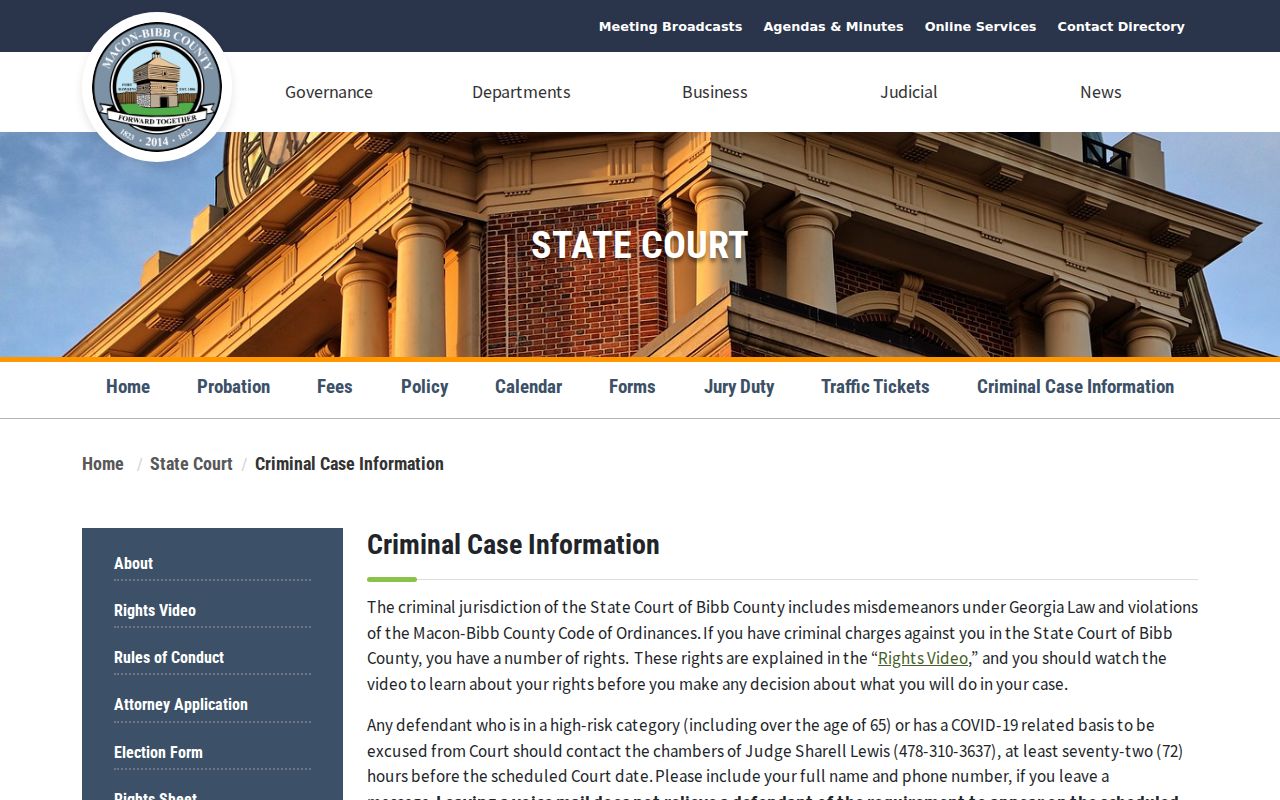
Reading the jail timestamp beside the court event helps explain a release that crossed midnight or followed later processing. It also prevents an unrelated docket update from being mislabeled as a release.
Reconcile Bibb Release Dates
Build a short timeline for each person. Start with the last confirmed current-custody entry. Add the court filing time, the jail release time, and any VINELink event. If another agency took custody, add the first record from that system. This sequence reveals gaps that one public page cannot answer.
A late-night release can fall on a different date from an afternoon court order. A transfer may not appear in the receiving system at once. Records created by separate agencies can also use different event labels. Keep the original wording and never convert “transfer” into “release.”
When two records conflict, ask the office that created each one to explain its own entry. The sheriff cannot correct a court order, and a clerk does not maintain the GDC record.
Bibb Three-Day Custody Paths
County, state, federal, and immigration systems stay separate. A person at the Law Enforcement Center begins with the sheriff record. Someone sent to GDC moves to the statewide offender search. A federal criminal transfer belongs in BOP, while immigration detention belongs in ICE.
Macon Transitional Center is a state facility, not a county jail. A person leaving it should be checked through GDC and, if supervision follows, DCS or the parole board. The county roster is not the source for that state release.
The Sheriff's Community Service Center and Work Release program is local. Its record path remains with sheriff and court sources unless state control follows. Macon Youth Development Campus serves youth under DJJ, and its restricted records do not fit an adult release list.
Request Bibb Records Clearly
A useful three-day request names the record, date range, and person. Include a booking or case number if known. Ask for booking date, release time, release type, court or bond basis, and any transfer or hold notation. This scope answers the release question without assuming a public list exists.
If the response lacks a field, ask whether it is not maintained, was withheld, or belongs to another office. The answer determines whether the next step is sheriff records, the clerk, GDC, or another custodian.
Match Bibb Release Bookings
Keep results grouped by booking. One person can have more than one jail event, court case, or active hold. A three-day date range may include the end of one booking and a new event tied to another matter. Booking numbers and court case numbers prevent those records from being merged.
Precise identifiers also help with corrections. If a date, type, or destination appears wrong, send the disputed field and its booking number to the office that created it. A sheriff record, court order, and GDC entry may describe related events, but each agency controls its own data.