
Bibb Projected Versus Actual Release
A Bibb County projected release date is an agency calculation, not a promise that a person will leave at a set hour. A sentenced Georgia prisoner may have a maximum possible release date in a Georgia Department of Corrections record. A parole-eligible prisoner may also have a Tentative Parole Month, or TPM, from the State Board of Pardons and Paroles. Those fields answer different questions. The maximum date concerns sentence administration. A TPM marks a point in parole review and is not a parole grant. The actual release occurs only after the responsible agency clears the person for departure or transfer.
Someone held before trial has no computed prison discharge date. A Bibb County jail detainee may leave after bond is posted, a judge signs an order, charges are resolved, time is served, or another agency takes custody. Court paperwork and hold checks can change the result. The sheriff's current inmate search does not provide a confirmed future-date calculator. For a local sentence, use the court order and ask the Bibb County Sheriff's Office for the official jail calculation.
Find Bibb County Release Dates
Begin by identifying the custody system. The Bibb County inmate search checks current county custody. The GDC offender query covers Georgia state prisoners and released state offenders. Neither should be used for the other's records. Name spelling, date of birth, booking number, case number, and GDC ID help separate people with similar names.
- Check the sheriff search to learn whether the person is now in the Bibb County Law Enforcement Center.
- Read the court order for a local sentence, bond decision, sentence modification, or time-served ruling.
- For state custody, search GDC by name or GDC ID and open the matching offender record.
- Read status, last or current institution, sentence data, and the maximum possible release date as separate fields.
- Check the parole board's TPM source only if parole applies. Do not treat a TPM as a guaranteed release.
- If a calculation is unclear, request the official record from the agency that holds it.
The broader Bibb County released-inmate search path explains how court, jail, GDC, and transfer records fit together after a person disappears from a live roster.
For a local case, the docket can explain what the jail search cannot. A bond order may permit release while the charge remains open. A sentence may award credit for days already held. A later order may correct or replace the first sentence. Request the signed order when the date matters, since a docket label alone may omit terms that affect the jail's computation. If the person moved to another county or state agency, ask the sheriff record for transfer details before searching the next system.
The official GDC offender query form shows the state search entry point used for sentence and status checks.
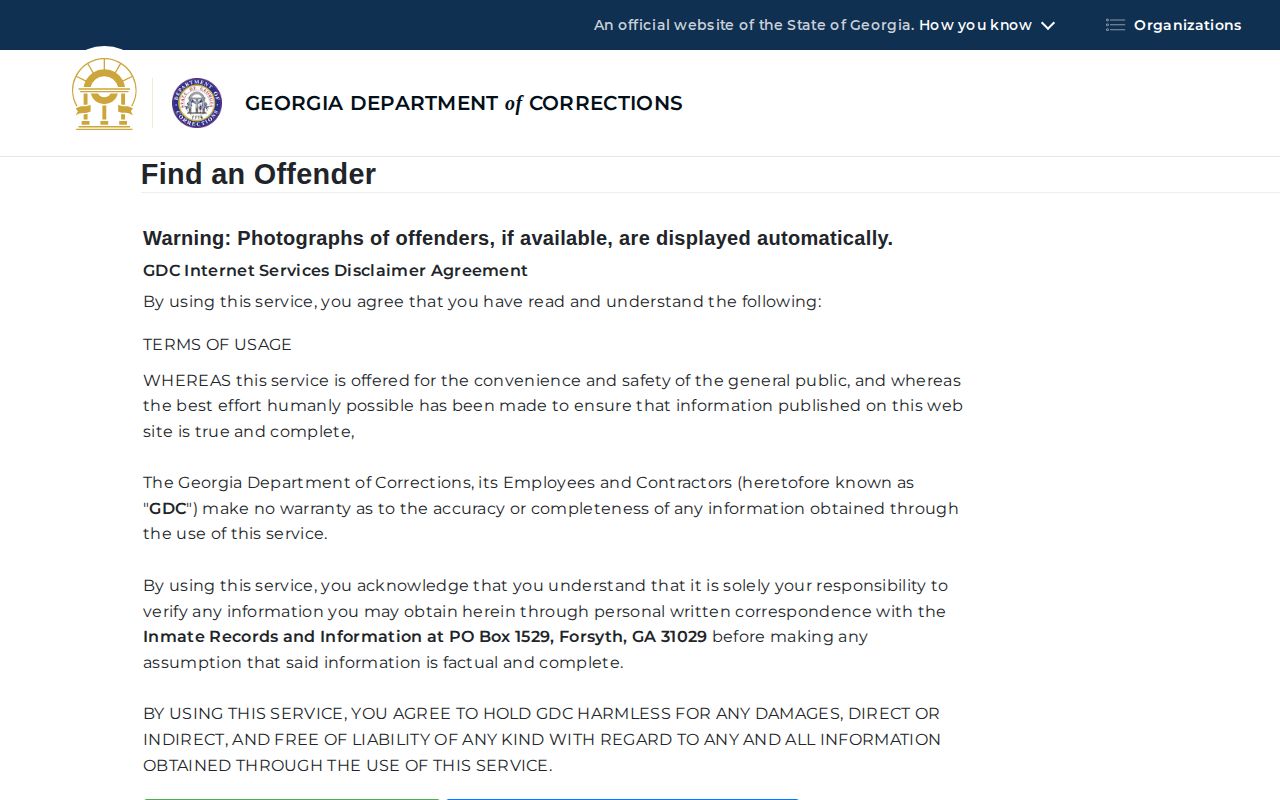
The form is relevant to state custody. A Bibb County jail date still comes from the sheriff and controlling court record. If no result appears, check spelling and identifiers before concluding that no state record exists. A recent transfer may also take time to appear. Confirm the custody route with the sheriff's transfer record and then ask GDC about the matching state entry.
Bibb Release Credits and Sentences
Good-time and earned-time credit must be described with care. Georgia calculation rules vary with custody type, sentence, offense, conduct, and agency. County jail credit is not the same as GDC prison credit. A misdemeanor sentence at the Bibb County jail may turn on the judge's sentence, jail credit, and local calculation. A GDC prison term is administered by GDC and may also involve parole-board action. A web estimate cannot replace either calculation.
Sentence length is only the starting point. Administrators must match each sentence to its start date, concurrent or consecutive terms, prior custody credit, and any valid amended order. Concurrent terms run at the same time. Consecutive terms run one after another. Those terms can produce very different maximum dates even when two case summaries list similar counts. GDC records may update after new documents arrive, so save the date of the record being reviewed and check again if the court has acted.
Georgia Code supplies the governing sentencing framework. O.C.G.A. 17-10-1 is a core sentencing provision. O.C.G.A. 17-10-6.1 sets service and parole restrictions for serious violent felonies. It is inaccurate to apply a blanket 85-percent rule to every Georgia sentence. Some serious offenses carry mandatory restrictions, while other dates depend on sentence terms, authorized credits, eligibility rules, and agency action.
The official Georgia Code source provides the statutory context used to interpret a Bibb County projected release date.
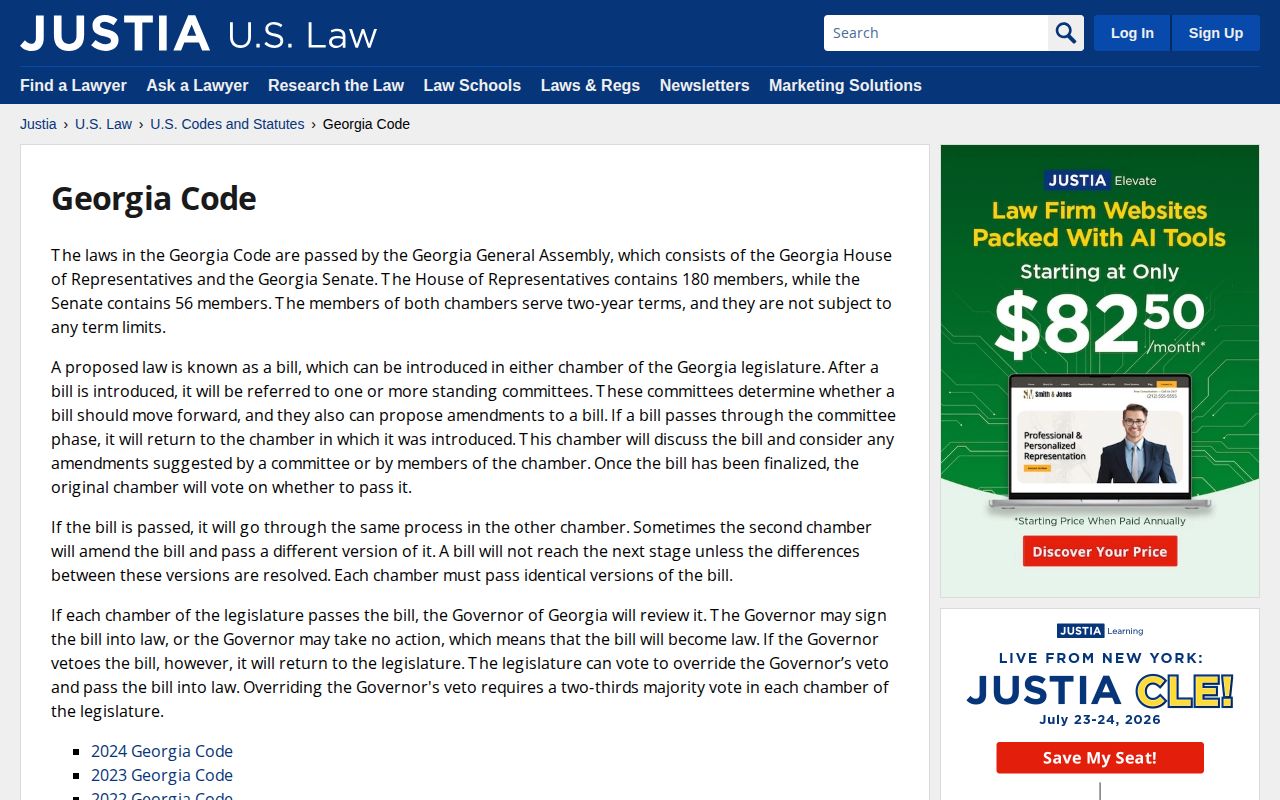
Statutes set legal limits, but the actual calculation remains with the court, jail, GDC, or parole board.
Note: Ask for the official calculation when sentence credit or offense restrictions could alter the displayed date.
Why Bibb Release Dates Change
A date can move for legal, record, or custody reasons. Some changes shorten the term. Others delay community release or redirect the person to another agency. The source of the change determines where to verify it.
Note the system, date viewed, exact field label, and agency contact. Maximum possible release date, Tentative Parole Month, and a court sentence end date are not interchangeable. Preserving the label helps explain later updates and gives records staff a focused question.
| Change | Effect and source |
|---|---|
| Court action | A modified sentence, bond order, revocation, or corrected judgment can change the local or state calculation. Verify with the clerk and signed order. |
| Jail credit correction | Credit for prior custody may be corrected. Ask the jail or GDC for the official computation. |
| Hold or warrant | Another agency may take custody even when the current sentence ends. A release from one system may be a transfer. |
| Parole action | The board may grant, deny, defer, reconsider, or rescind action. A TPM alone is not final. |
| Conduct or programs | Discipline and qualifying program factors may affect state credits under applicable rules. |
| Agency recalculation | GDC may update sentence data after receiving a new order or correcting a record. |
No Bibb County source located for this project states that weekend or holiday releases automatically move to a named weekday. Processing can depend on court papers, bond, staffing, warrant clearance, and transfer timing. The jail or court record is controlling for the person at issue.
A hold can be easy to misread. When another county, state, federal, or immigration agency has authority to take custody, the first agency may record a release even though the person does not enter the community. The event is a release from one legal custody and a transfer into another. Ask for the receiving agency and transfer date, then use that agency's locator or records office. The word “released” without a destination is not enough to settle where the person went.
Confirm Bibb County Release Timing
Use a second official channel before relying on a projected date. For a state prisoner, compare the GDC record with the parole board TPM lookup when parole is relevant. The board explains eligibility and process, while GDC maintains sentence-administration data. For county custody, compare the jail information with the signed court order and the sheriff's release record.
Georgia VINE can provide custody-change alerts when an agency participates. Registration works best before the expected event. An alert is useful notice, but it is not the formal release record. The Bibb County VINELink check explains the person search and notification steps. Exact release time should still be confirmed with the custody agency.
For parole, compare each date label before calling it final. Eligibility means the law and sentence allow consideration. A TPM is a tentative month selected in the board process. A grant is board action, and physical release still requires completion of agency steps and clearance of any hold. A denial or deferral can move the expected path without changing the maximum possible release date in the same way. The parole board and GDC should therefore be read together, not treated as duplicate databases.
The GDC open-records channel is the fallback for a state calculation or discharge record that the public offender page does not explain.
For Bibb jail custody, request the calculation through the sheriff. Include the booking number, case, sentence date, and specific field. Those facts distinguish a projected date from an actual past release time.
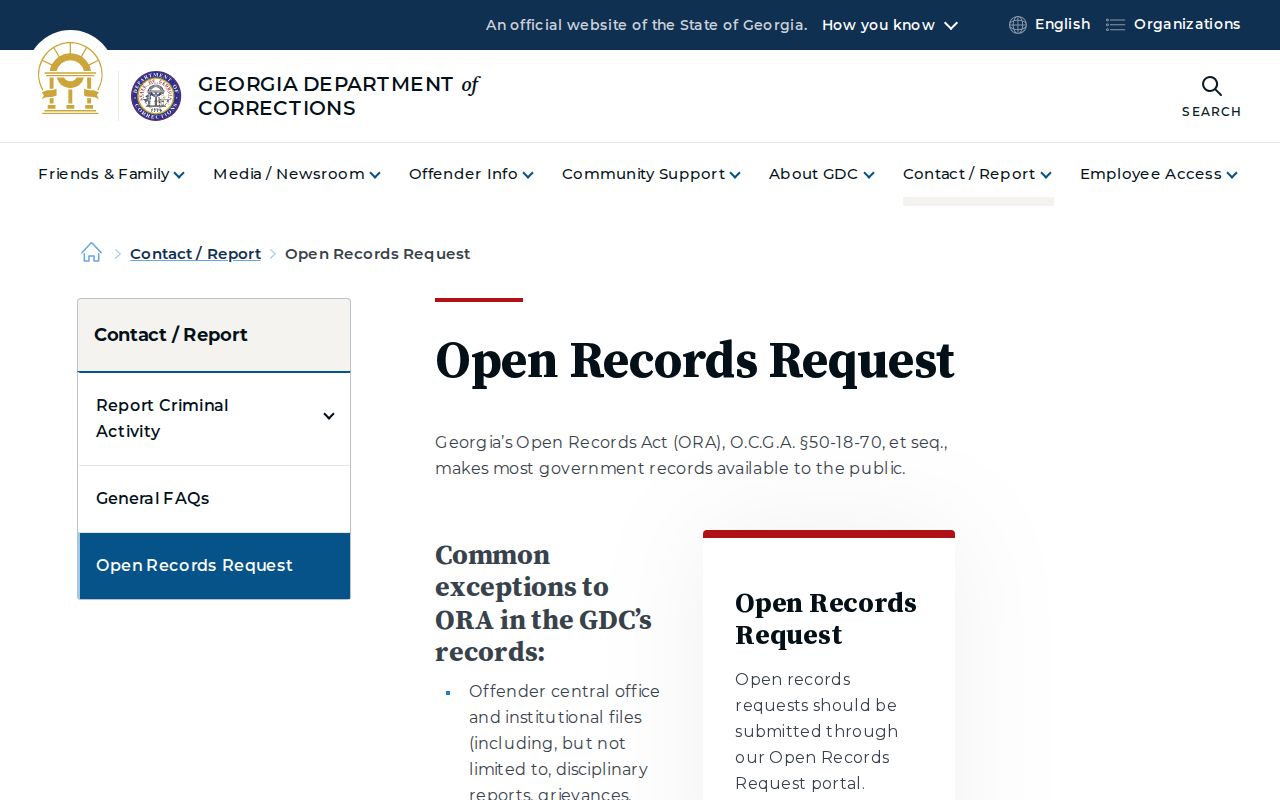
A narrow request should identify the person, GDC ID if known, requested date field, and the sentence or order being checked.